

When purchasing a peanut butter making machine, buyers often face a wide range of choices that differ significantly in price, configuration, and build quality. This guide explains the key technical and practical factors to evaluate so you can avoid common pitfalls and select a peanut butter grinder that genuinely fits your production needs.
1. Motor Power: Look Beyond the Marketing Numbers
Power is one of the most frequently exaggerated specifications in peanut butter machine marketing. In practice, the rated motor power directly determines the grinding efficiency, output capacity, and service life of a commercial peanut butter maker.
When evaluating a peanut butter making machine, pay attention to these professional details:
- Rated power vs. peak power: Manufacturers sometimes advertise peak power rather than continuous rated power. Always confirm the rated power (kW) stated on the nameplate.
- Matching power to the grinding structure: A colloid mill (the most common grinding mechanism in a peanut butter machine) relies on the gap between the rotor and stator. Insufficient motor torque leads to overheating, jamming, and reduced fineness, especially when processing high-oil-content peanuts.
- Throughput correlation: As a reference, small bench-top models typically run at 1.1–2.2 kW, while commercial peanut butter processing equipment may range from 7.5 kW to 30 kW or more, depending on hourly output.
It is advisable to purchase from a well-known brand or a reputable vendor, and to request detailed parameter sheets and, where possible, a working demonstration to verify that the power meets your actual production demand.
2. Material Safety: Food-Grade Stainless Steel Matters
Because a peanut butter making machine comes into direct contact with food, material safety is critical. Professional buyers should prioritize food-grade stainless steel construction — typically 304 or 316 stainless steel.
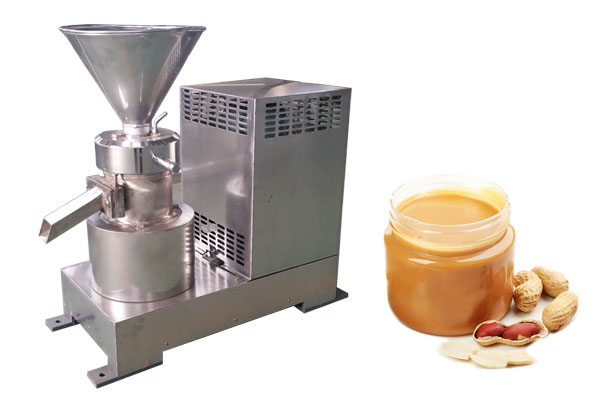
Key points to verify:
- Corrosion resistance and durability: Stainless steel resists rust and does not release harmful substances into the peanut butter, unlike lower-grade metals or coated surfaces that may chip over time.
- Food safety certifications: Check whether the machine has passed relevant certifications such as CE, FDA, or ISO 22000, which indicate compliance with food-contact safety standards.
- Hygienic design: Welded seams, dead corners, and non-food-grade seals are common weak points in low-quality peanut butter grinders. Confirm that all product-contact parts, including the grinding chamber and discharge outlet, are made of certified stainless steel.
3. Cleaning and Disassembly: A Frequently Overlooked Cost
A peanut butter making machine must be cleaned promptly after use; residual peanut paste can oxidize, harbor bacteria, and affect the taste and shelf life of the next batch. Cleaning difficulty is therefore a real operational cost that deserves serious attention.
When comparing models, consider:
- Smooth internal surfaces: A well-designed colloid mill should have polished, crevice-free product-contact surfaces that prevent paste accumulation.
- Sanitary standards: For commercial production, equipment designed to sanitary standards (such as 3-A Sanitary Standards principles) simplifies cleaning validation and supports food safety compliance.
Machines with overly complex structures can make cleaning labor-intensive and increase downtime. Choosing an easy-to-clean peanut butter maker saves time, energy, and maintenance cost over the equipment’s lifecycle.
4. Additional Professional Considerations
Beyond the three core factors above, professional buyers of a peanut butter making machine should also evaluate:
- Fineness and adjustment range: The rotor–stator gap of a colloid mill determines particle size. Confirm the achievable fineness (commonly 50–200 mesh) and whether the gap is adjustable for different products such as smooth or crunchy peanut butter.
- Cooling and thermal management: Continuous grinding generates heat; check whether the machine has adequate cooling to prevent flavor degradation of the peanut butter.
- After-sales support and spare parts: Availability of replacement rotors, stators, and seals is essential for long-term operation of peanut butter processing equipment.
Conclusion
When purchasing a peanut butter making machine, consumers and commercial buyers should not focus on price alone. By carefully evaluating rated motor power, food-grade stainless steel materials, food safety certifications, cleaning convenience, grinding fineness, and after-sales support, you can make an informed comparison and choose a peanut butter grinder that truly suits your needs. We hope these professional reminders help you avoid detours in the buying process and select a satisfactory peanut butter making machine.