-
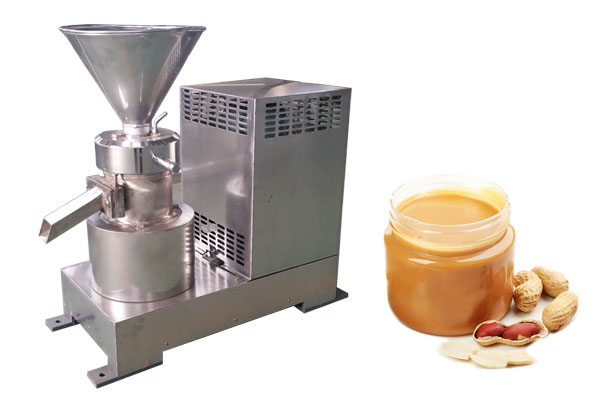
How to avoid pitfalls when buying a peanut butter machine?
When purchasing a peanut butter making machine, consumers and commercial buyers should not focus on price alone. By carefully evaluating rated motor power, food-grade stainless steel materials, food safety certifications, cleaning convenience, grinding fineness, and after-sales support, you can make an informed comparison and choose a peanut butter grinder that truly suits your needs.
-

Must the peanut butter making machine be made of stainless steel?
Stainless steel is the preferred material for a peanut butter making machine, but it is not the only option. Learn how SS304 vs. SS316 grades, corrosion resistance, and hygiene standards affect your purchasing decision—and when alternative materials may be acceptable for low-volume production.
-

How to choose the peanut butter making machine with appropriate power?
Power selection for a peanut butter making machine should match your actual production demand. Household users can choose low-power, small-scale equipment, while commercial users need high-power, large-scale commercial peanut butter machines to meet continuous production needs.
-

What Is the Relationship Between Power and Efficiency of a Peanut Butter Making Machine?
When purchasing a peanut butter making machine, users should weigh the balance between power and efficiency according to their specific needs, while also paying attention to the comprehensive performance and user experience of the machine to ensure they choose the equipment that best meets their own requirements.
-

Why is the food contact part of peanut butter making machine made of stainless steel?
Why is the food contact part of peanut butter making machine made of stainless steel? Stainless steel can not only meet the special needs of peanut processing, but also effectively ensure food safety and prolong the service life of equipment.
-

Principles for adjusting the rotor-stator gap in peanut butter machine
In a peanut butter making machine, adjusting the rotor-stator gap is critical. It directly affects grinding efficiency, particle size, and equipment service life. Follow these professional principles for optimal performance.
-
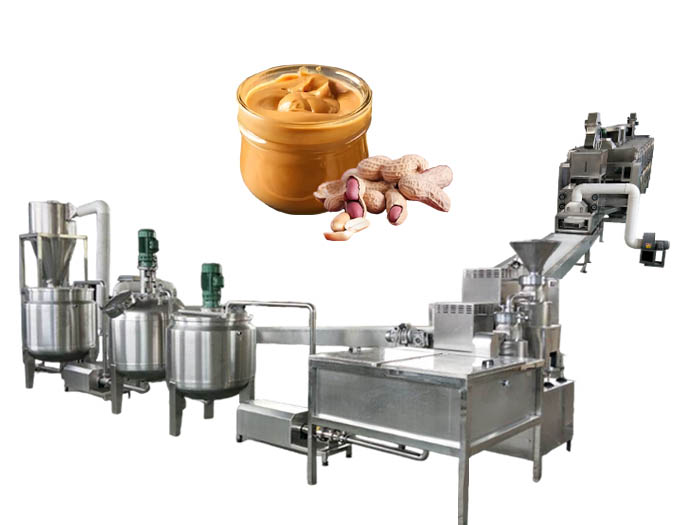
What does “capacity reservation” mean in a peanut butter production line?
In food production management, “capacity reservation” is a common concept, referring to reserving some production capacity during the planning and design of a production line for potential future demand growth or special circumstances. So, specifically for a peanut butter production line, what does “capacity reservation” mean?
-

Why “Roasting Before Peeling” Is the Golden Rule in Peanut Butter Processing
For most commercial peanut butter production, roasting before hulling results in better flavor, higher hulling efficiency, and a safer food environment.
-

How to Improve the Efficiency of a Peanut Butter Production Line
Production efficiency is a key metric for any peanut butter production line. This article explores advanced automation, process optimization, raw material quality, and maintenance strategies, with the aim of helping you increase output, reduce waste, and remain competitive in the growing peanut butter market.
-

Peanut butter machine gear common faults and solutions
We have listed five common failures of peanut butter machine gears and their solutions. If you encounter other problems or unsolvable faults in the process of using peanut butter machine, please feel free to contact us!
-

Common electrical faults of peanut butter making machine and their solutions
Learn about common electrical faults in peanut butter making machine, including power supply issues, control component failures, and motor malfunctions. Discover practical troubleshooting steps, preventive maintenance techniques, and key technical knowledge to optimize equipment uptime and improve the production efficiency of your peanut butter production line.
-

Fully Automated vs. Semi-Automated Peanut Butter Production Line: Floor Space, Layout, and Key Design Considerations
Comparing floor space requirements for fully automated vs. semi-automated peanut butter production lines. Understanding these spatial distinctions is essential for cost-effective plant engineering, workflow optimization, and long-term production agility.
-
How to improve the grinding efficiency of peanut butter making machine
Improving the grinding efficiency of a peanut butter making machine is a top priority for peanut processing enterprises. Learn about raw material pretreatment, parameter tuning, maintenance, and advanced technical insights to optimize your peanut grinding machine performance and product quality.
-

What’s wrong with the obvious graininess of peanut butter processed by peanut butter making machine?
A obvious grainy texture in peanut butter can be caused by a variety of factors, including insufficient peanut processing, insufficient performance of the peanut butter machine, short processing time, improper additive ratios, and the choice of peanut variety.
-

How to judge whether the feeding speed of peanut butter making machine is appropriate?
Learn how to evaluate the ideal feeding speed for your peanut butter making machine by analyzing discharge texture, motor load sounds, thermal dynamics, and throughput efficiency. Optimize your nut butter production line with these expert operational insights.
-

Peanut Butter Making Machine Won’t Start? 6 Common Causes & Fixes
Is your peanut butter machine not starting? Don’t force it – this could cause permanent damage to the motor. Learn about six technical causes (power, motor, overload, jams, switches, maintenance) and step-by-step troubleshooting methods to quickly resume your nut butter production.
-

Is it easy to control the filling accuracy of peanut butter filling machine?
Is it easy to control the filling accuracy of a peanut butter filling machine? The answer is yes. Today’s peanut butter filling machines can easily achieve an accuracy of ±0.5% to ±1%, reliably producing products with precise filling and consistent quality.
-

What happened to the abnormal filling speed of peanut butter filling machine?
During the operation of peanut butter filling machine, the problem of abnormal filling speed sometimes occurs, which may be caused by many reasons. The following are some common reasons and solutions:
-

Motor protection of peanut butter making machine
The motor protection of peanut butter machine needs to start from many aspects, including overload protection, regular maintenance, voltage stability and correct operation. Only by doing these measures well can we ensure the efficient operation of the equipment, prolong its service life and bring greater benefits to production.
-

What are the consequences of an improper gap between stator and rotor of peanut butter machine?
In the process of equipment operation, it is very important to adjust the gap between stator and rotor. If the gap between stator and rotor is not suitable, it will have many effects on the normal operation of peanut butter equipment and product quality.


News